
About us
Older than the suburb.
The stone church on McKern St was built in Parramatta, taken apart stone by stone, and rebuilt here in 1928.
Here is how that happened.
Work on the church began in Parramatta in 1840 as St Andrew's Presbyterian Church, and the first service was held there in November 1849. It is built in the Old Colonial Gothick Picturesque style: a simple tower and nave, pinnacles and battlements, pointed-arch windows and plain, solid buttresses. Churches like it are rare in Sydney, and the stonework from the 1840s is older than almost anything else in the suburb. When the Parramatta congregation outgrew it in the 1920s the building was due for demolition, until Wentworthville Presbyterians proposed taking it apart stone by stone and rebuilding it here.
Not everything made the move. The Parramatta church had an upstairs gallery, a flat ceiling and timber-panelled walls, none of which were rebuilt in Wentworthville. The stone, the tower and the windows did.
Services began in the re-erected church in July 1928, and a commemorative tablet was dedicated on 24 November 1928. In 1978 the Governor of NSW, Sir Roden Cutler, unveiled a plaque marking fifty years of worship on this site. Nearly a century on, the same building is still full of people meeting the same Jesus.
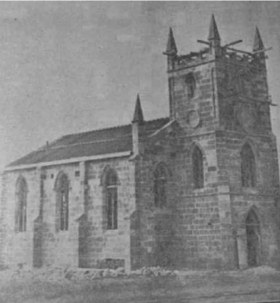
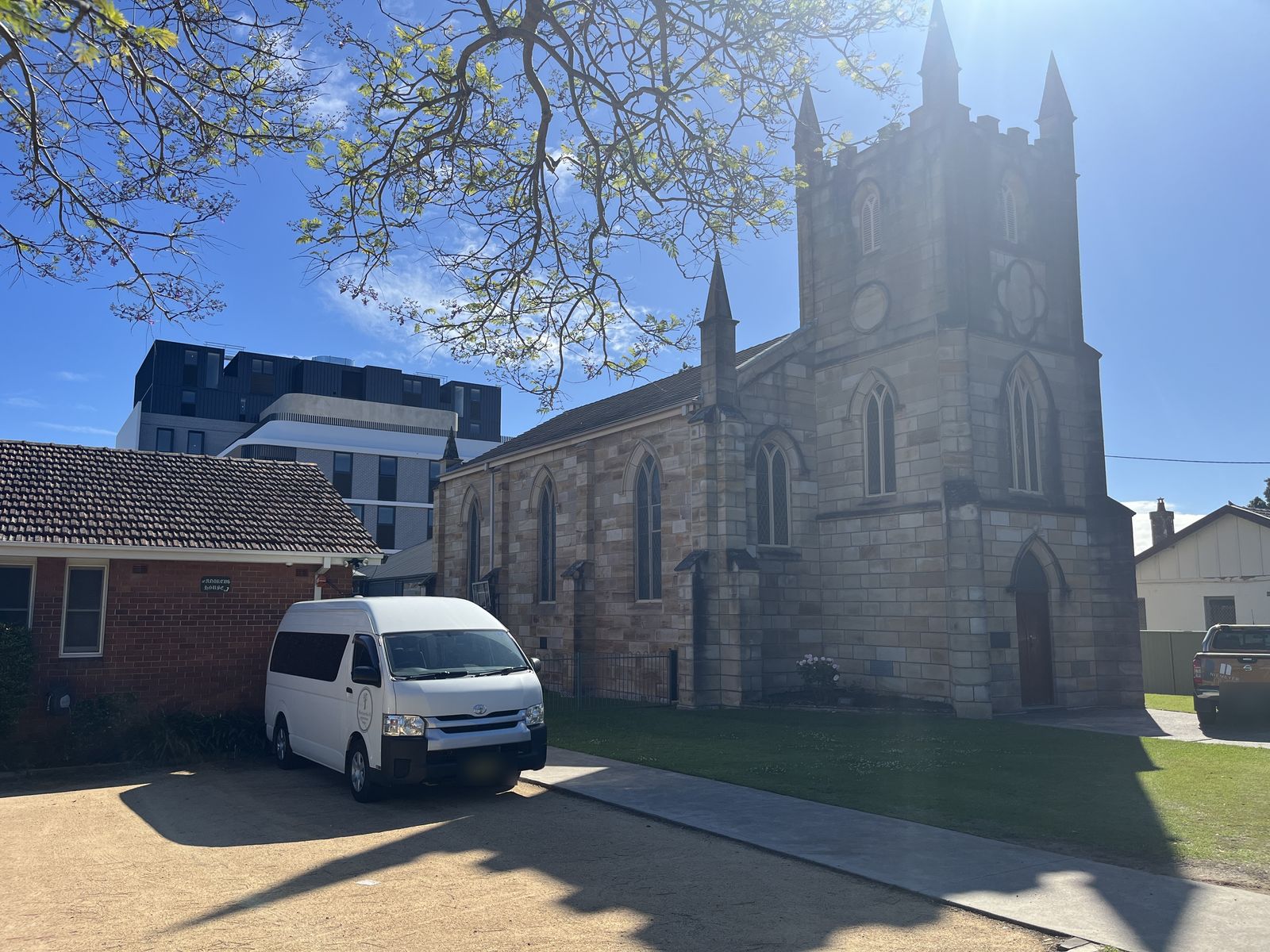
The building, year by year
-
1840–49
Built in Parramatta
Work on St Andrew’s Presbyterian Church begins on Church St, Parramatta, in 1840. Architects James Houison and James Hume shape the design, with stonework by David Lennox, better known for his bridges. The first service is held in November 1849.
-
1912
Presbyterians in Wentworthville
The first Presbyterian church in Wentworthville opens in a small weatherboard building at 59 Railway St. By 1920 the congregation has outgrown it, and from 1926 services are held in the nearby School of Arts while a bigger church is found.
-
1924
Dismantled
Outgrown by the Parramatta congregation and due for demolition, the church is taken down stone by stone. The Wentworthville congregation moves the stones here and stores them until land can be bought.
-
1926
Land purchased
The lot at 5a McKern St is bought with a loan from the Presbyterian Church of NSW, guaranteed by six Wentworthville members.
-
1928
Re-erected in Wentworthville
Every stone was numbered for the move by treasurer Alf Snow and parishioner John McMurtrie. The congregation gives £1,000 (about $95,000 today) towards the rebuild, services begin by July, and a commemorative tablet is dedicated on 24 November 1928. The loans are discharged in 1947.
-
1929
Small hall built
A sandstone hall is added behind the church and dedicated on 31 August 1929.
-
1964
Large hall and vestry added
Financed by a bank loan and completed on 20 June 1964.
-
1978–88
Restored
A restoration fund is launched in the Golden Jubilee year; the stonework is conserved and repaired in time for the Diamond Jubilee in 1988.
-
2005–06
Fire and restoration
On 4 February 2005 a fire guts the small hall and kitchen. The church itself is spared. Twelve months of quotes, then six months of work, and everything is reinstated by November 2006.
-
2023–27
Renovation and redevelopment
An architectural site plan, heritage plan and Cumberland Council development application are completed to contemporise the internal buildings and facilities, improve accessibility, enable safe ministry and foster church community through connected spaces. Building works are anticipated to commence in early 2027.
-
2028
100 years in Wentworthville
Centenary plans to come. Watch this space!
The church is listed as a heritage item on the Cumberland Local Environmental Plan 2021, which recognises it as a rare surviving example of its style and a place of worship for nearly a century.
Dates and names from the Heritage Impact Statement prepared by NBRS Architects, December 2023.
Come and see it
The best way to see the church is on a Sunday morning, with the people who fill it. The hall next door is also available to hire.